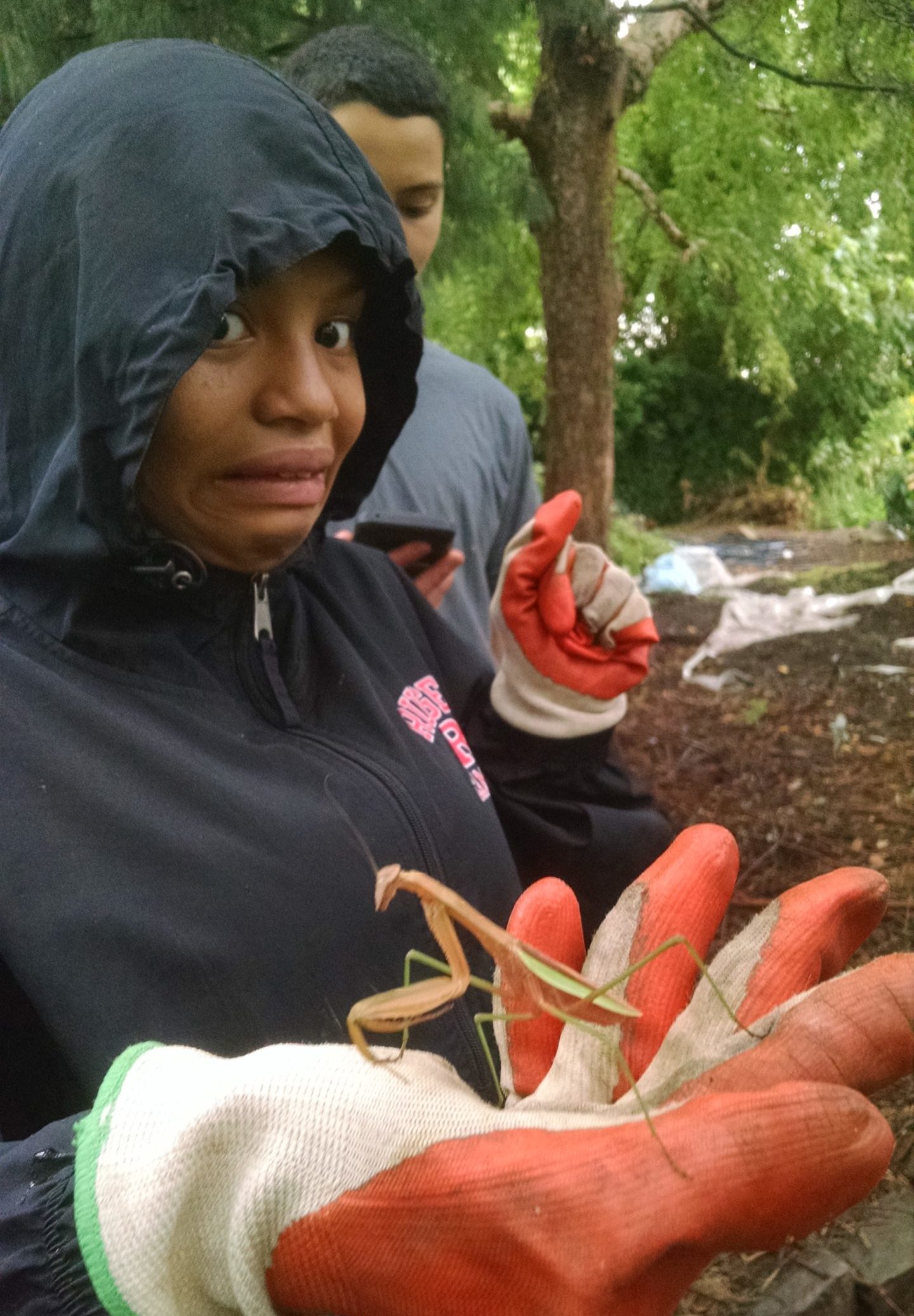
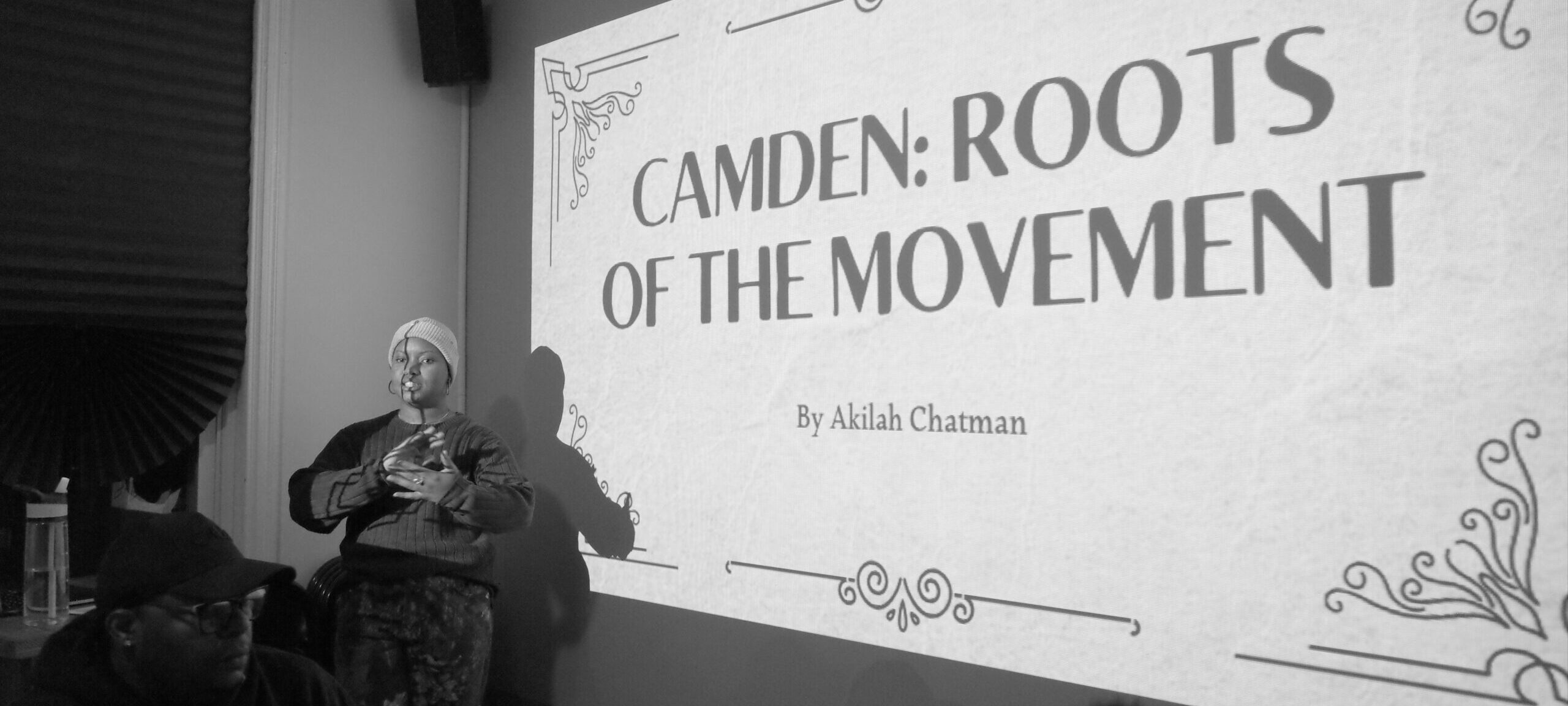
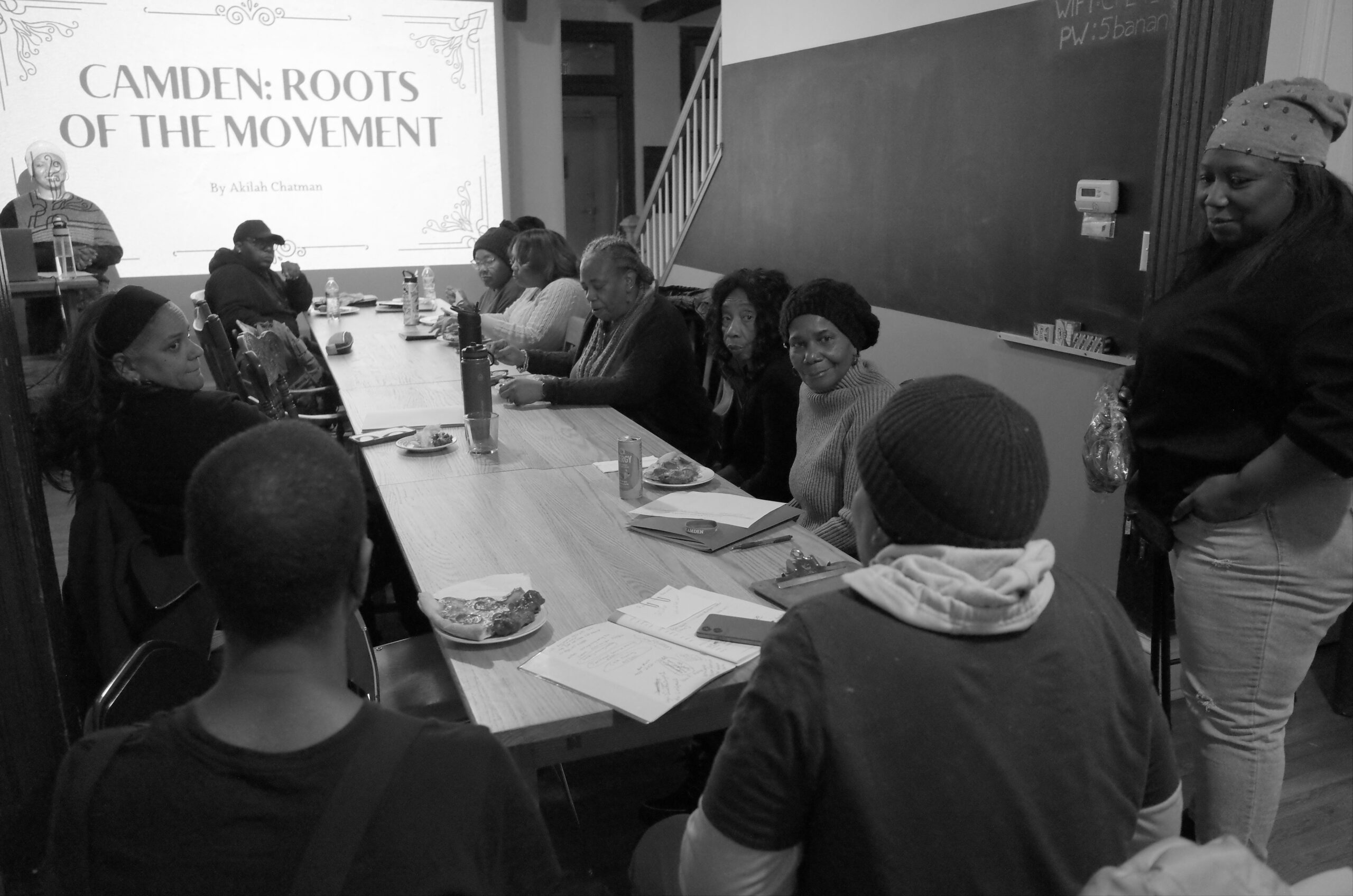
Science Shop for Community Resilience is a participatory action research program based at the Academy of Natural Sciences of Drexel University. Science Shop works collaboratively with communities in Pennsylvania, Delaware and New Jersey to design projects that address their lived experience with climate change and environmental injustice. In partnership with the Center for Environmental Transformation, Science Shop is working with community members to map environmental data and community-made art that represents the experience of living in Camden.
What the Land Remembers
Camden Environmental Stories
OVERVIEW
What the Land Remembers is an exhibition exploring Camden’s environmental history
through the perspectives of artists, residents, and the communities who have lived
alongside its changing landscape.
Camden’s relationship to land and water has been shaped by industry, migration,
development, disinvestment, pollution, and generations of community advocacy. Once
one of the most industrialized cities in the country, Camden’s factories, shipyards,
transportation networks, and manufacturing economy transformed both the city and its
relationship to the Delaware River. As industries closed or relocated, they left behind not
only economic disruption, but contaminated land, polluted waterways, industrial
infrastructure, and environmental burdens that continue to shape life in the city.
Yet Camden’s environmental story is not solely one of harm. It is also a story of resistance,
adaptation, stewardship, reclamation, and residents working to imagine healthier
relationships between people and place.
Presented in partnership with the Center for Environmental Transformation, What the Land
Remembers invites artists to consider how environmental history is held in the land, the
body, the neighborhood, and collective memory. The exhibition will be presented at CFET
in conjunction with the Camden Environmental Story Festival.
CURATORIAL FRAMEWORK
What the Land Remembers invites artists to reflect on:
• Environmental justice and the unequal distribution of environmental harm
• Camden’s industrial and postindustrial landscapes
• Air, water, soil, heat, flooding, pollution, and climate change
• The relationship between environmental conditions and human health
• Land as a holder of memory and history
• Neighborhoods shaped by industry, infrastructure, displacement, and development
• Community resistance and environmental advocacy
• Gardens, green infrastructure, parks, and ecological restoration
• Relationships between people, plants, water, animals, and the built environment
• Environmental futures rooted in care, justice, and community power
The exhibition approaches environmental justice as both a historical and contemporary
condition. Artists are encouraged to examine what has happened to Camden’s
environment, who has carried the consequences, what communities have done in
response, and what a more just environmental future might look like.
CAMDEN ENVIRONMENTAL FOUNDATION
Camden’s landscape cannot be separated from its industrial history. Factories,
shipbuilding, transportation infrastructure, waste facilities, and manufacturing helped
shape the city’s growth while also leaving significant environmental consequences.
Today, Camden continues to contend with contaminated sites, air pollution, combined
sewer overflows, flooding, extreme heat, limited tree coverage, and the environmental
effects of dense industrial activity. Waterfront South in particular has experienced an
extraordinary concentration of environmental burdens within a community of less than one
square mile.
At the same time, Camden residents and organizations have continually challenged the
idea that pollution and environmental neglect are inevitable conditions of urban life.
Community advocacy, environmental education, gardens, parks, green stormwater
infrastructure, brownfield remediation, and neighborhood organizing demonstrate another
part of Camden’s environmental story: the ongoing work of reclaiming land and building
healthier futures.
This exhibition asks artists to enter that history not simply as observers, but as storytellers.
What does the land remember?
What does environmental change look, sound, or feel like when experienced through a
neighborhood?
What has been lost?
What has survived?
And what might Camden’s environment become when residents are able to imagine its
future for themselves?
CALL FOR ART
DATES
Canvas Pick-Up: September 20 at the Center for Environmental Transformation and September 27 at Camden FireWorks 12-3 PM
Artist Registration Closes: September 27, 2026 at 11:59 PM
Completed Artwork Drop-Off: September 27 12-3 PM, October 1 & 2 2026, 12–5 PM at Camden FireWorks
Exhibition Opening / Camden Environmental Story Festival: 12-4 PM October 3, 2026 at the Center for Environmental Transformation
Exhibition Close: November 20, 2026
ELIGIBILITY
This call is open to artists ages 18 and older at any stage of their practice.
Participating artists will receive one 10 x 10 inch canvas provided by the exhibition
organizers. Canvases may be picked up from Camden FireWorks during the designated
pick-up dates listed above.
Completed artwork must remain 10 x 10 inches and must arrive wired and ready to hang.
Artists are encouraged to interpret the environmental themes of the exhibition through
their own experiences, artistic practices, histories, neighborhoods, and relationships to
place.
WHAT WE’RE LOOKING FOR
We invite artwork that:
• Responds to Camden’s environmental past, present, or imagined future
• Explores relationships between people and the natural or built environment
• Addresses environmental justice, pollution, climate, health, or infrastructure
• Reflects on land, water, air, plants, neighborhoods, or ecological systems
• Considers memory, ancestry, history, or community relationships to place
• Documents or interprets experiences of environmental change
• Examines environmental resistance, advocacy, stewardship, or repair
• Imagines healthier, more equitable, and more sustainable futures
Artists do not need to illustrate environmental data or respond literally to a specific
environmental issue. Abstract, narrative, symbolic, personal, historical, and experimental
interpretations are welcome.
ARTWORK REQUIREMENTS
Artists must:
1. Create one original artwork using the provided 10 x 10 inch canvas.
2. Respond in some way to the exhibition’s environmental theme.
3. Return the completed artwork by the designated deadline.
4. Ensure that the completed work is securely wired and ready to hang.
5. Provide the artwork title, artist name, medium, and a brief statement about the work
at drop-off.
HOW TO PARTICIPATE
Artists interested in participating must complete the What the Land Remembers Artist Registration Form via Jotform by:
September 13, 2026 at 11:59 PM.
Jotform Registration: https://form.jotform.com/262375026429055
The registration form will collect basic artist and contact information, a short bio, and a
brief description of how the artist intends to respond to the exhibition’s environmental
themes.
After registering, artists may pick up their provided 10 x 10 inch canvas from Camden
FireWorks during one of the designated canvas pick-up dates.
Participation is subject to canvas availability. Artists are encouraged to register and pick up
their canvas early.
EXHIBITION GOALS
What the Land Remembers aims to:
• Center art as a tool for environmental storytelling
• Connect Camden’s environmental history with contemporary lived experience
• Create opportunities for residents to encounter environmental justice through visual
culture
• Make complex environmental issues accessible through personal and creative
interpretation
• Recognize the relationship between environmental health, community history, and place
• Highlight both environmental harm and community agency
• Encourage dialogue about what environmental justice can look like in Camden’s future
POSSIBLE PUBLIC PROGRAMMING
• Artist talks and community conversations about environmental justice
• Guided exhibition tours during the festival
• Environmental storytelling activities for residents and families
• Conversations with Camden environmental advocates and organizers
• Hands-on art and ecological workshops
• Opportunities for residents to contribute memories, observations, or hopes for
Camden’s environmental future
CLOSING STATEMENT
What the Land Remembers understands Camden’s environment as more than a backdrop.
Land, water, air, buildings, streets, gardens, and neighborhoods all carry evidence of the
decisions that have shaped the city and of the people who have continued to care for it.
Environmental justice asks us to consider not only what has happened to a place, but who
has been asked to live with the consequences and who has been empowered to determine
what happens next.
Through the work of artists, What the Land Remembers creates space for Camden’s
environmental story to be examined, felt, questioned, and reimagined. The exhibition
invites us to recognize what the city’s landscape carries while also asking what we are
capable of growing from here.